Managing Emotions
Managing emotions is about understanding how you feel and finding healthy ways to cope when emotions become overwhelming.
Everyone experiences difficult emotions from time to time, and learning how to recognise, express and manage them can help you feel more in control and support your overall wellbeing. This section offers practical ideas and strategies to help you navigate your emotions and respond to them in a way that feels safe and manageable.
Support is available if you or someone you know are having a mental health crisis or emergency, no matter what you’re going through.
Find out where to get urgent help for mental health

Helpful information
Talking to someone about your feelings
Why talking helps
When you share how you’re feeling, it can:
Make things feel less overwhelming
Help you understand what’s going on
Lead to information and resources that work for you
Show you that you are not alone
Even if you’re not sure what to say, just starting a conversation can be a big first step.
Who could you talk to
Finding someone you trust can make a difference. You could talk to:
A friend or sibling
A parent, carer, or someone in your family
A teacher, tutor, or trusted adult at school
You can also talk to someone outside your usual circle if that feels easier
Not sure how to start?
Try saying:
“I’ve been feeling really anxious lately and don’t know what to do.”
“Things feel a bit much right now – can I talk to you?”
“I’m not sure how to explain it, but I’m not feeling like myself.”
Just being honest is a great place to begin. You could also use self-help tools to figure out how you’re feeling first.
Anger
Anger is a normal human emotion. It can be helpful when it motivates us to address problems or protect ourselves, but it can cause difficulties if it is not expressed in healthy ways. Anger often comes up when we feel threatened, frustrated, attacked, or treated unfairly, and it is not always a “bad” emotion.
Helpful anger can highlight when something is hurting us, motivate positive change, and help us defend ourselves. Unhelpful anger can lead to destructive behaviours, affect mental or physical health, and hurt others around us.
Anger can be expressed in different ways. Some people show it outwardly through shouting, swearing, or aggression. Others turn it inward, directing anger at themselves. Some express anger passively by avoiding or ignoring others.
Anger is influenced by how we interpret situations. Common triggers include feeling threatened, frustrated, or out of control. Learning to recognise and challenge these interpretations can help reduce anger.
Physical signs of anger may include a fast heartbeat, rapid breathing, tense muscles, clenched jaw or fists, restlessness, sweating, shaking, or narrowed vision. Noticing these early signs can help you calm yourself before anger escalates.
When you feel anger building, try slowing your breathing, counting to ten, taking a short walk, or stepping away from the situation. Talking to someone you trust can also help. Over time, learning your triggers, practising calming techniques, communicating feelings clearly, and looking after sleep, food, and activity levels can reduce anger.
Physical activity can help burn off adrenaline, such as going for a run or walk, cycling, or swimming. Other helpful strategies include ripping up paper, punching a cushion, listening to calming music, or using guided breathing. Try breathing in for seven seconds and out for eleven seconds, repeating this several times to reduce physical tension and emotional intensity.
Finally, it can help to pause and ask yourself how important this will feel tomorrow, or in six months’ time.
Distressing Thoughts
There are times in life when we might feel totally hopeless, helpless and overwhelmed with emotional pain. It can seem like there is no other way out of our problems and that we may have run out of possible solutions.
Sometimes this can lead to suicidal thoughts. Suicidal thoughts can be common, but can be frightening and confusing. These thoughts can be a sign that some things need to change in your life – not that you need to end your life.
Self Harm
Self-harm is something some people use as a way of coping with very difficult feelings, painful memories, or overwhelming experiences. People have described it as a way to express things that feel impossible to put into words, or as a way of turning emotional pain into physical pain. Around 1 in 15 young people in Britain are thought to have self-harmed.
Anyone can self-harm. For some, it is linked to specific experiences such as trauma or abuse. For others, the reasons may feel unclear. Self-harm is not attention-seeking. It can be a way of feeling in control, especially if control has been taken away in the past, or a way of punishing oneself for things that feel overwhelming or wrongly blamed on yourself.
You are not alone, and you can ask for help even if you cannot explain why you self-harm. Support is available, and talking to someone can help.
It is important to seek help if you self-harm. You should see a GP or healthcare professional, as medical treatment may be needed. If you are in immediate danger or need urgent help, call 999.
Urges to self-harm can be distressing and feel hard to manage, but they do pass. Different strategies work at different times, so it can help to practise them before urges feel strong. Some young people find it helpful to use the Calm Harm app, draw on their skin with a felt-tip pen or henna, take a short cool shower, rip up paper, rub ice on the area, or place a plaster where they feel the urge to hurt. Others use strong tastes or sensations, such as popping candy, or delay acting on urges using the 15-minute rule while doing something distracting.
Understanding your own patterns can help reduce or stop self-harm. Try noticing what happens just before an urge starts, including thoughts, feelings, people, or situations that act as triggers. Physical signs such as a racing heart, intense emotions, repetitive thoughts, or risky decisions can be early warning signs. Spotting these early gives you more time to respond safely.
Distraction can help lower the intensity of urges, especially if used as soon as you notice them. Most importantly, you do not have to cope alone. Telling a parent, carer, friend, teacher, or doctor how you feel can help release some of the pressure and make things feel more manageable.
Exam Stress
Experiencing exam stress? You’re not alone. It’s natural to feel overwhelmed during an exam, but there are ways to manage this stress. Our video can help you with effective study strategies and relaxation techniques to navigate through pre, during, and post-exam pressures.
Low Mood
This is a webinar that has been created by our School-Based Needs team to talk you through different ways of improving your mood and motivation.
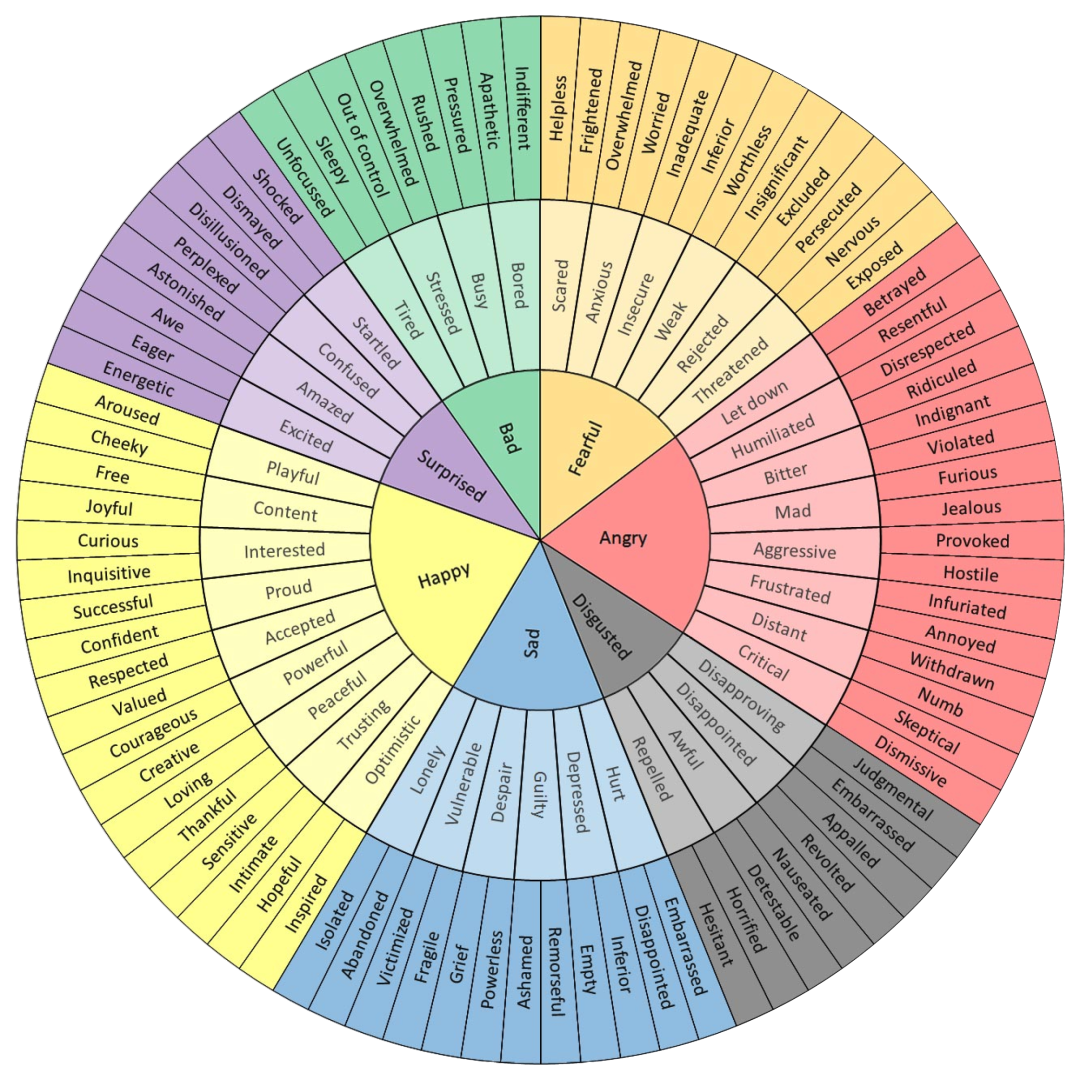
Feelings Wheel
You can use the feelings wheel to help you to identify your feelings. You may find it helpful to print this page out and have it handy for when you feel you are struggling to name your emotions.